









©Ruedi Walti
Project.
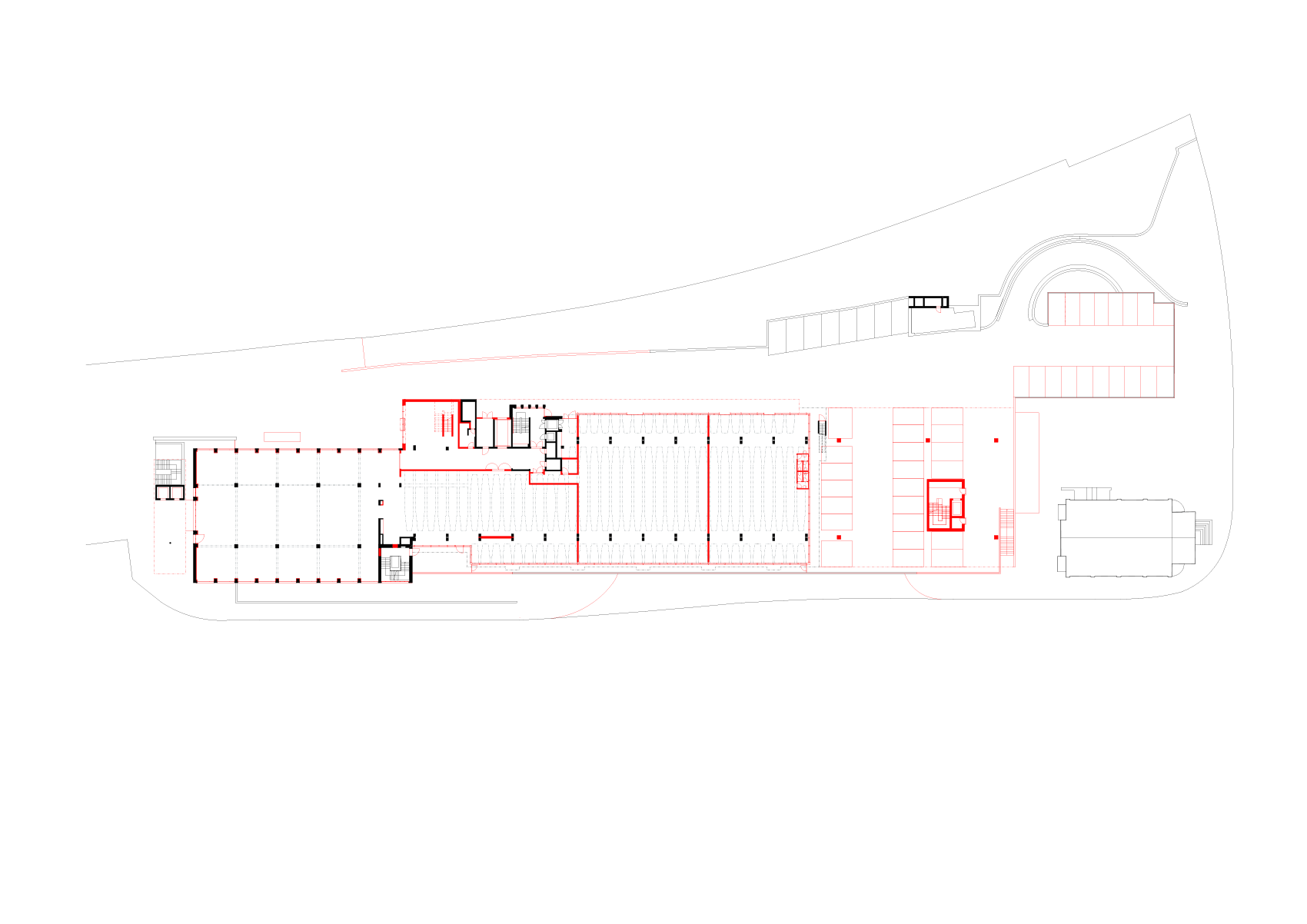
The “Postareal” site, comprising the former post office building, bus terminal and cinema, is refurbished, extended and revitalized. The two ground floors and the basement levels of the listed building are renovated and strategically extended. The site features new entrances, pedestrian routes, a public square and a delivery zone.
Architecture.
The entrances to the historic buildings are redesigned and articulated with two new canopies. Between the main building (1931) and the longitudinal extension (1975), a new entrance hall establishes the address from the train station. The annex completes the ensemble of buildings by Karl Moser and Häfeli-Moser-Steiger with a related design and closes the composition on the northern side. Preserving the architectural character of the post office and its first extension is a priority. The Kolinal finish of the metal components, together with the cubic forms of the canopies, entrance hall and annex, generates a dialogue and respectful interplay between “old” and “new.” The scope of intervention is reduced to the essential minimum.
The new entrances and the public staircase on the north side improve the permeability of the site.
Conservation of the existing buildings.
The listed façades are cleaned and retrofitted with new windows. In the main building, the external venetian blinds are replaced with fabric shades matching the original design. The existing ceilings are cleaned to visually increase the room height and are evenly illuminated. The technical installations beneath the ceilings remain exposed. Minimal, discreet glazing separates circulation areas from commercial spaces.
Bus terminal.
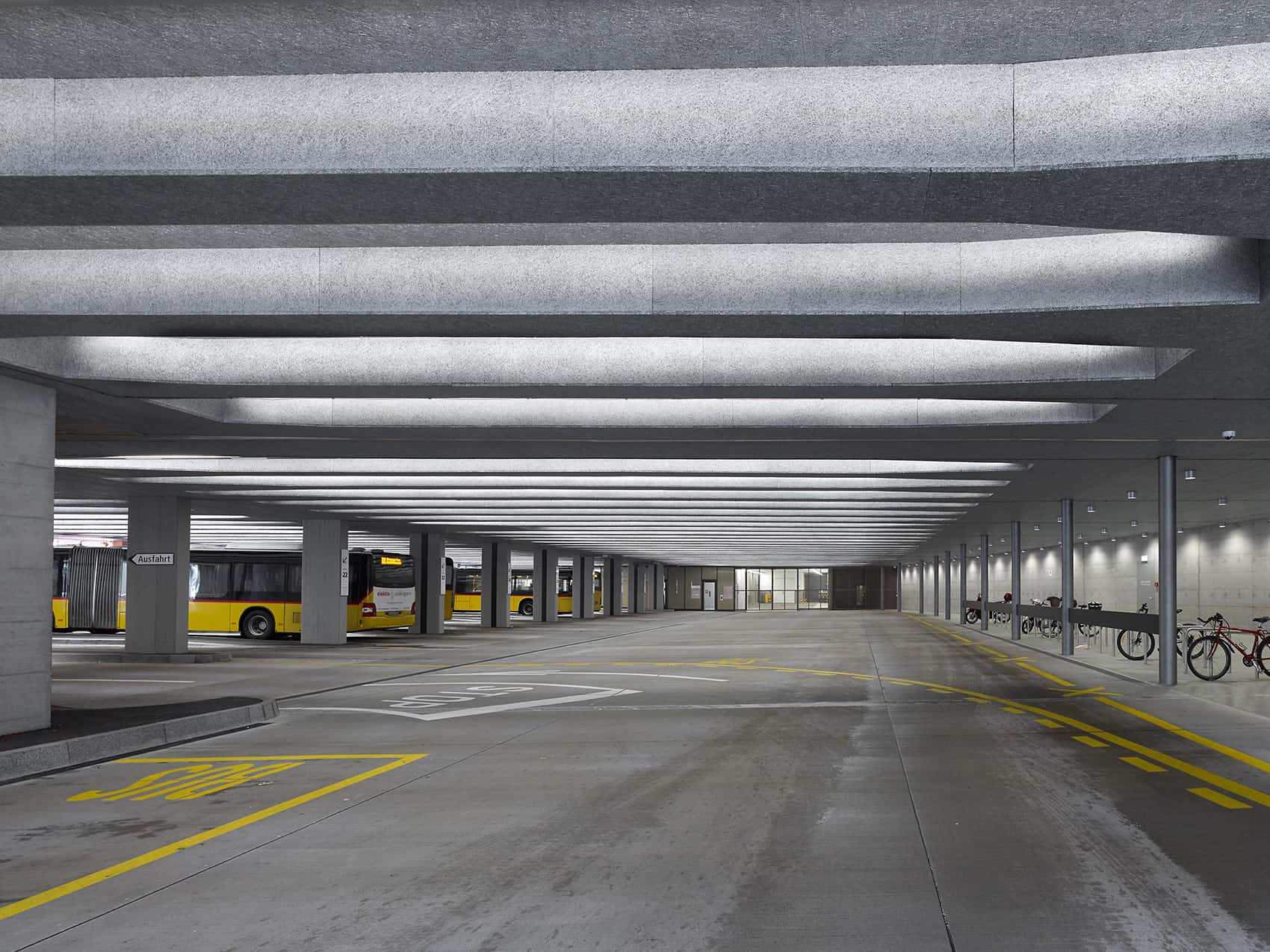
Two new platforms are added to the bus terminal. A new concrete floor, the exposed concrete entrance core of the annex, and the new glass-and-metal façade of the longitudinal building radically transform the existing hall. The ribbed ceiling is reclad, finished in silver and fitted with linear lighting. The roof structure now radiates evenly, creating a refined space with a distinctive character.
Annex.
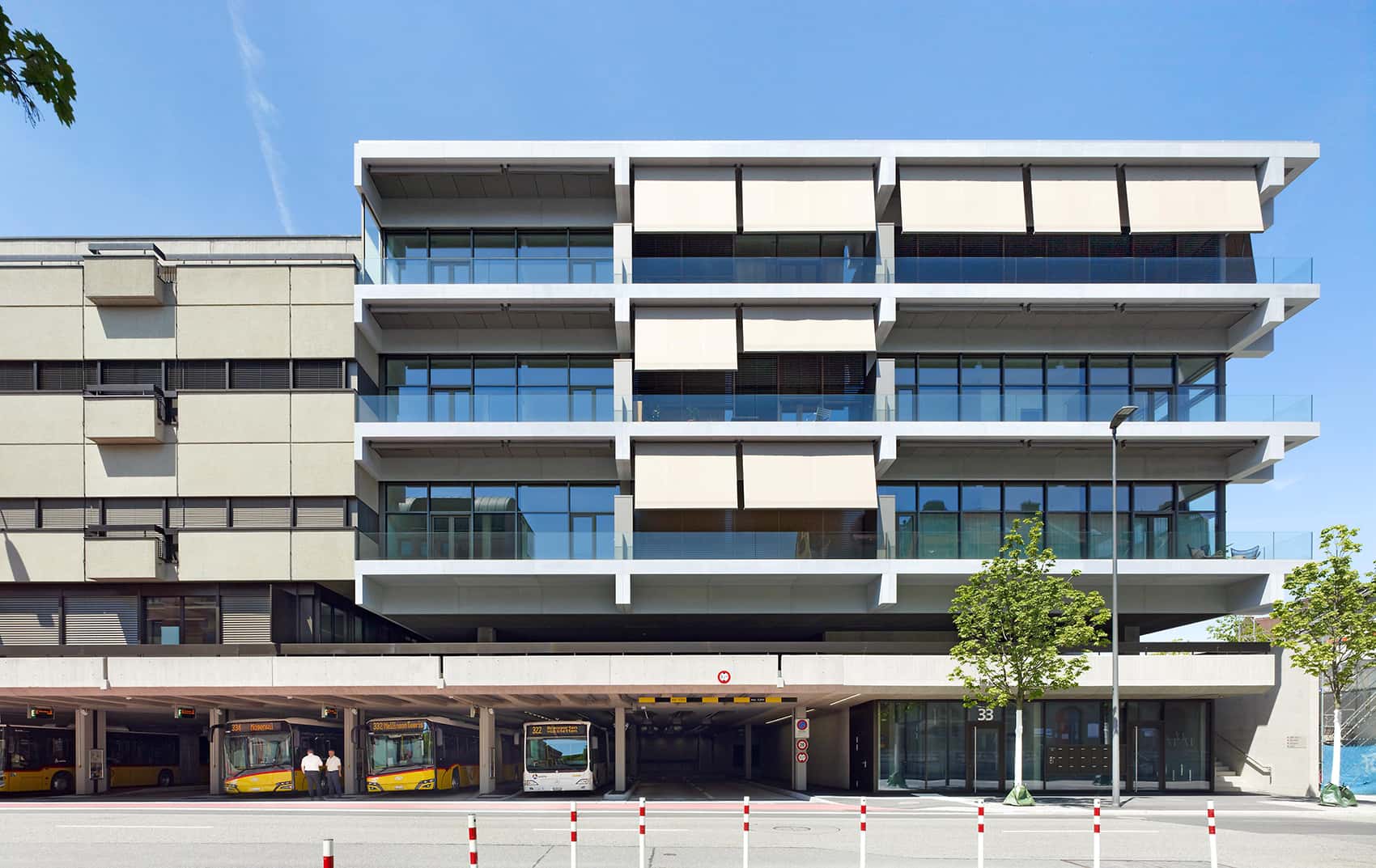
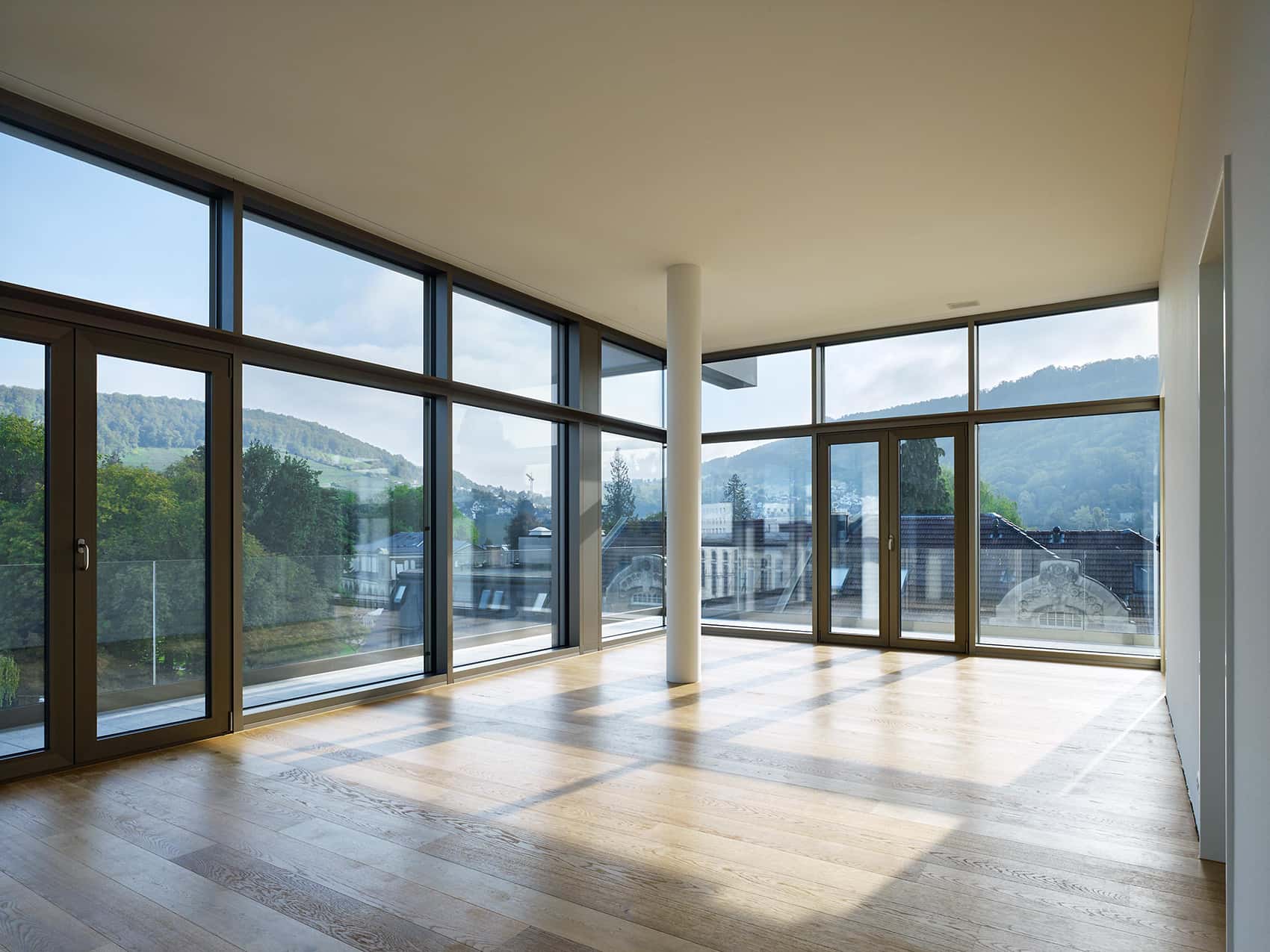
The new five-story building with its eighteen apartments is attached to the northern façade of the Häfeli-Moser-Steiger building. Its architectural language is derived from the existing structures: the floor heights are continued, while the ratio of open to closed façade elements is maintained but inverted. The surrounding balconies, together with the large-scale glazing, make the extension appear to hover above the ground. The exposed concrete structure references the longitudinal building, while the cast-stone cladding recalls the Moser building. The bus terminal defines the structural system above: the new concrete slabs, 100 cm thick, are carried by only five columns and the access core. The upper ground floor is conceived as an open, outdoor space.
Architecture:
DÜRIG AG, Zurich
Jean-Pierre Dürig, Guillermo Dürig, Marta Codina (PL), Denis Ferré, Ben Schmücking, Luiza Kitanishi, Manuel Plazuelo, César Rordriguez, Inés Hernández , Gian Derungs
Total contractor:
Allreal AG
Peter Windler
Cost planning/Construction management/Construction management:
Allreal AG
Peter Windler
Landcape architecture:
Vetsch Landschaftsarchitekten AG, Zurich
Jürg Zollinger
Civil engineer:
Dr. Deuring+Oehinger AG, Winterthur
Simon Braun
HVAC engineer:
Grünberg & Partner AG, Zurich
Serkan Kahramann
Electrical planner:
Bhend Eletroplan GmbH, Suhr
Urs Bhend, Christoph Brack
Sanitary planning / Sprinkler:
Reu Gmbh, Langnau
Martin Weideli
Building physics/Acoustic consulting:
Kopitsis Bauphysik AG, Wohlen
Rainer Armbruster
Building envelope and facade engineering:
Bardak Planungsbüro, Schaffhausen
Jugoslav Bardak
Lighting design:
Reflexion AG, Zurich
Rico Grob
Transport consulting:
IBV Hüsler AG, Zurich
Daniel Stäubli
Fire safety engineering:
ProteQ GmbH, Schaffhausen
Domagoj Lucic
Door planning:
BDS Security Design AG, Bern
Lars Tölle