





©Ruedi Walti
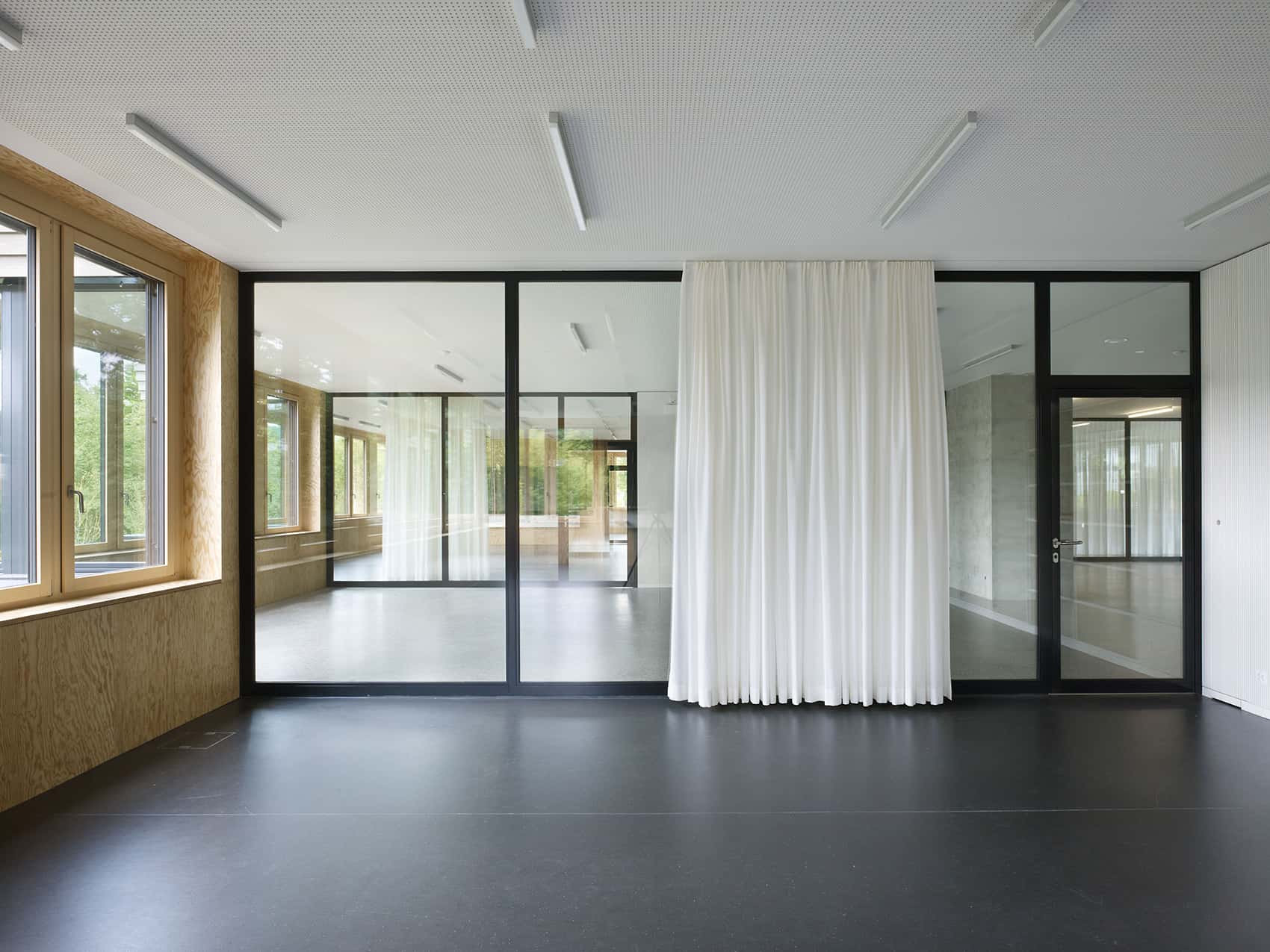
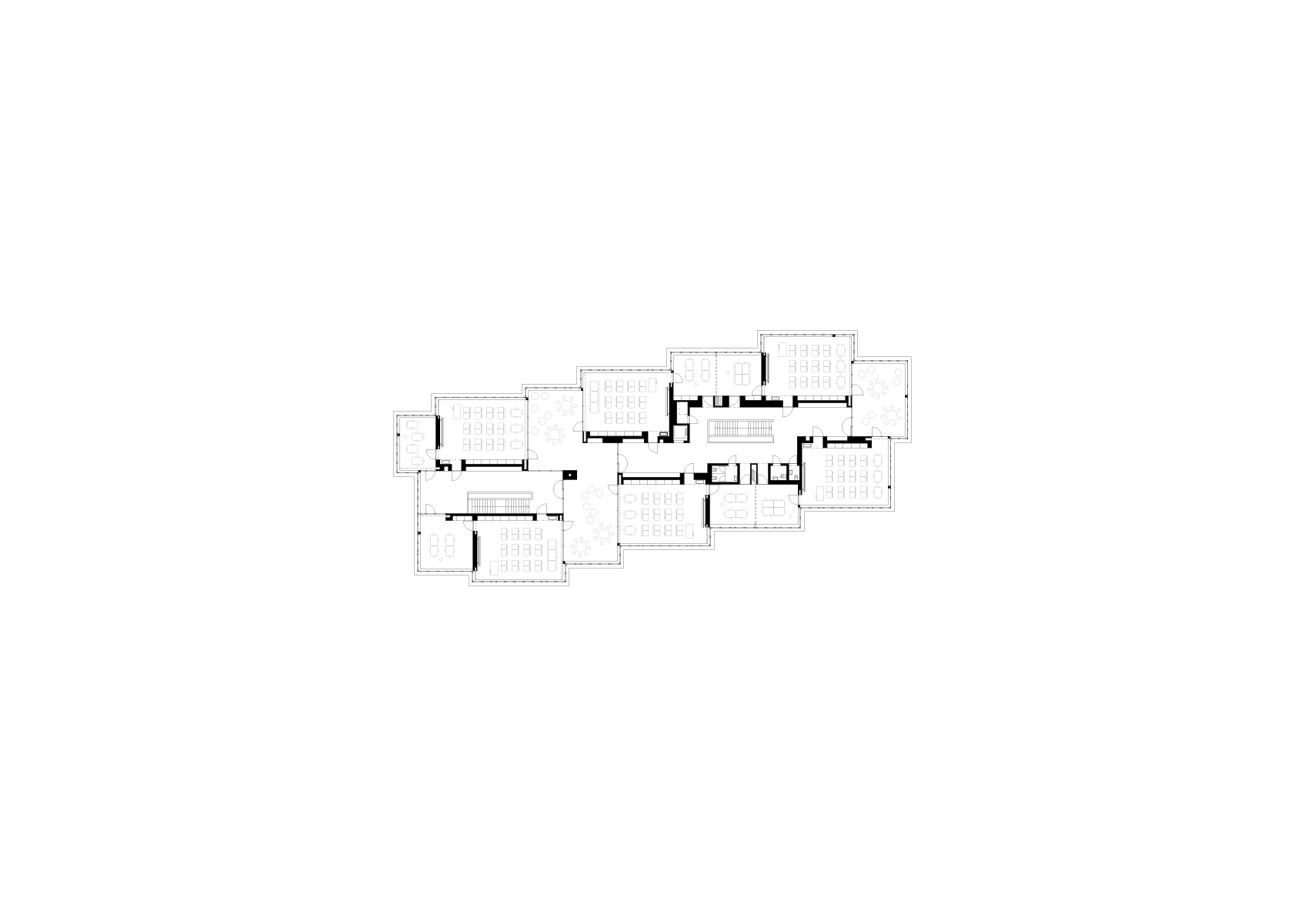
The pedagogical guidelines of the primary school in Birmensdorf inspired an innovative architectural interpretation. A flowing sequence of spaces fosters interaction between classrooms and creates openness, flexibility, and versatility in everyday learning. Visually and physically connected, the rooms form a continuous learning landscape.
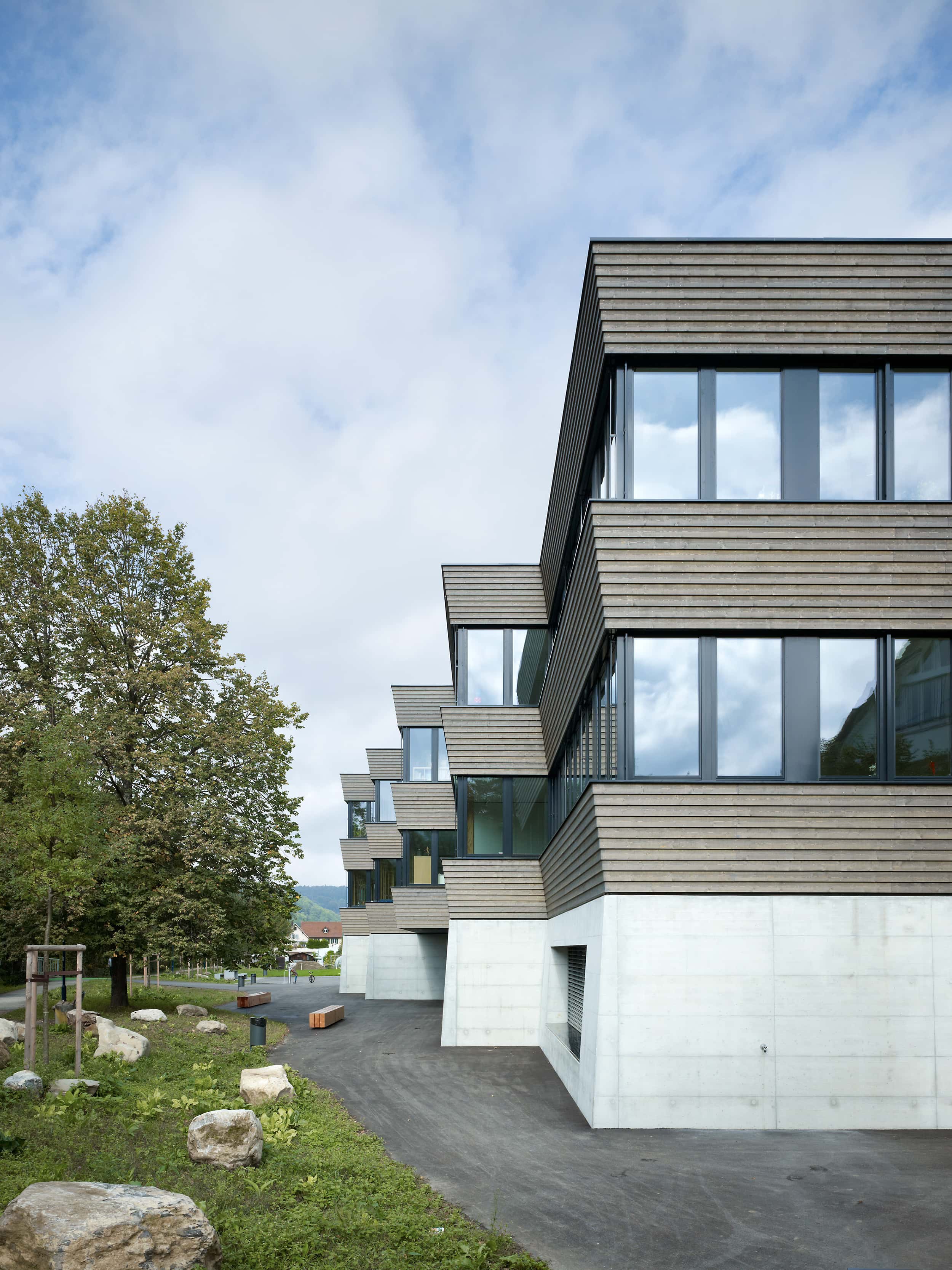
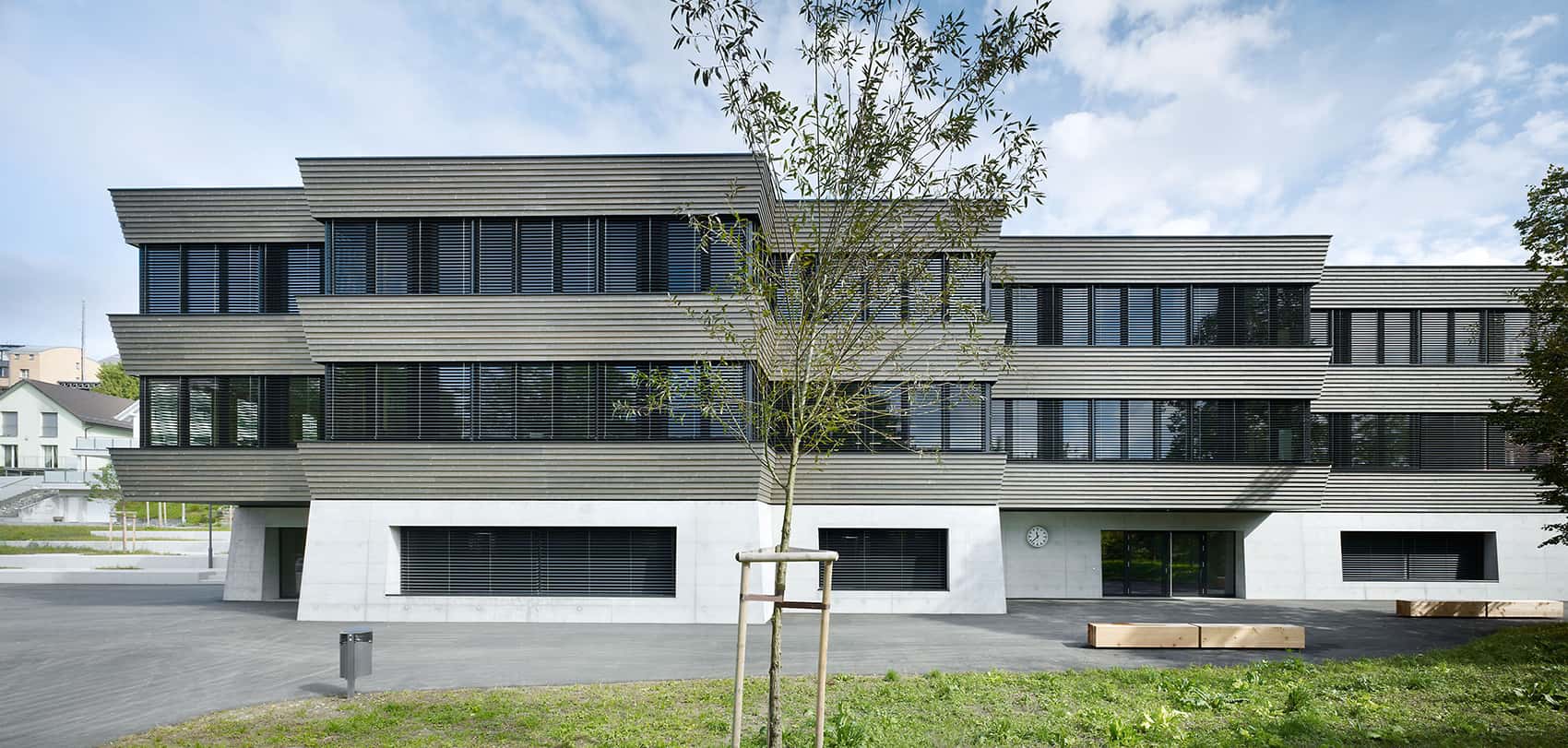
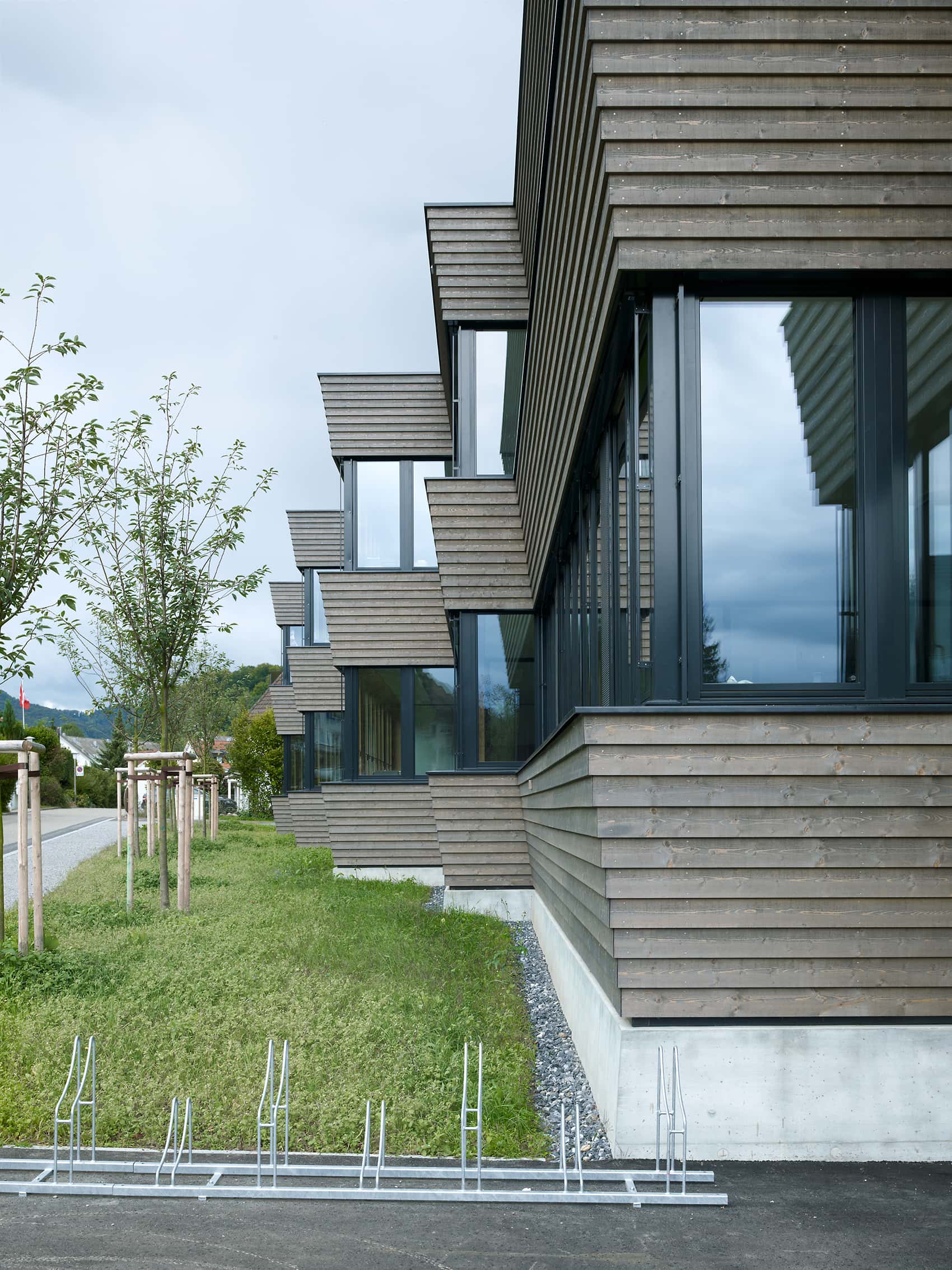
The staggered volume grants each classroom an additional façade, enhancing natural light and solar gains. At the same time, it shapes a structured, small-scale interior with niches and retreats, offering students both orientation and a sense of security.
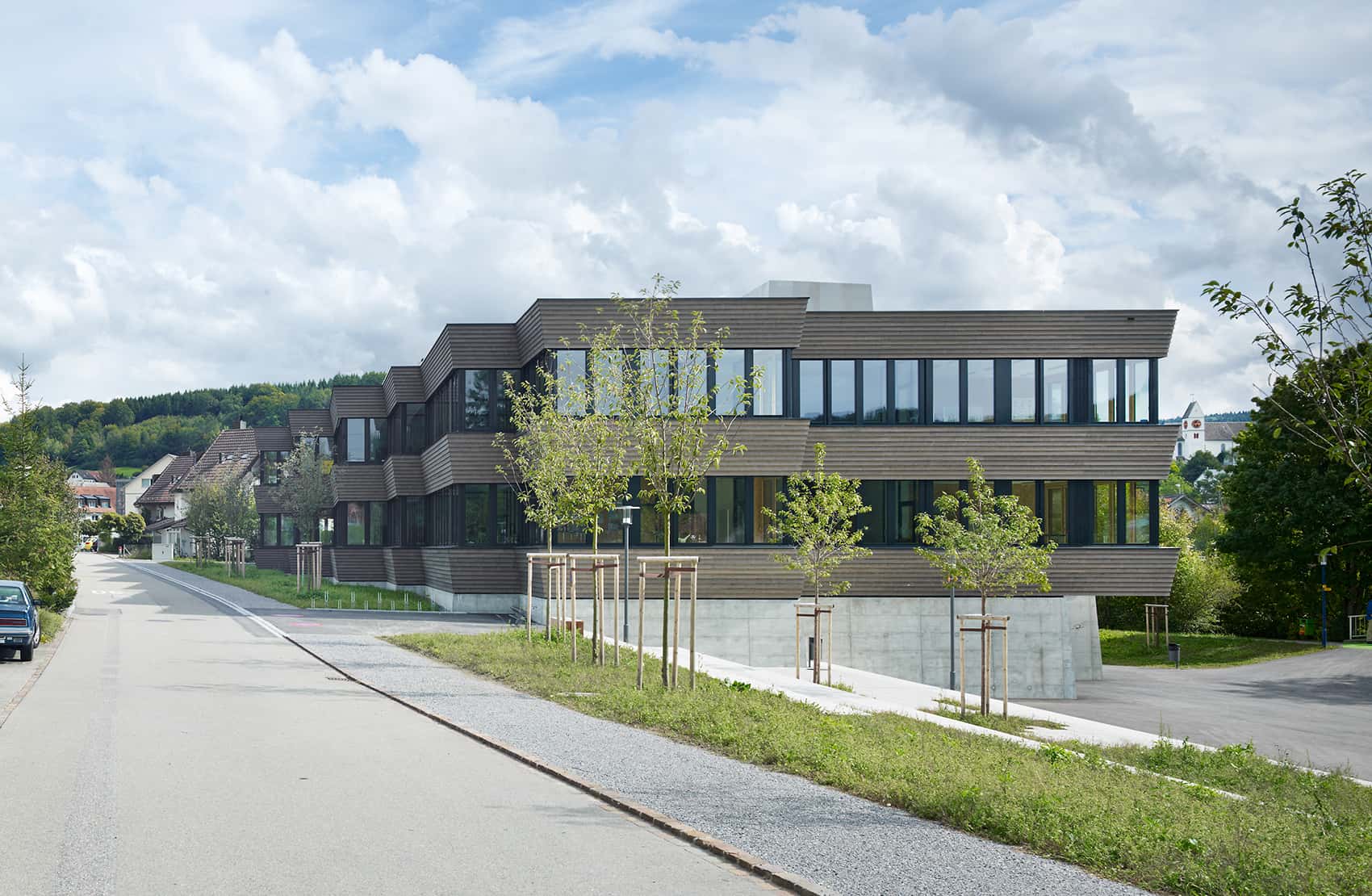
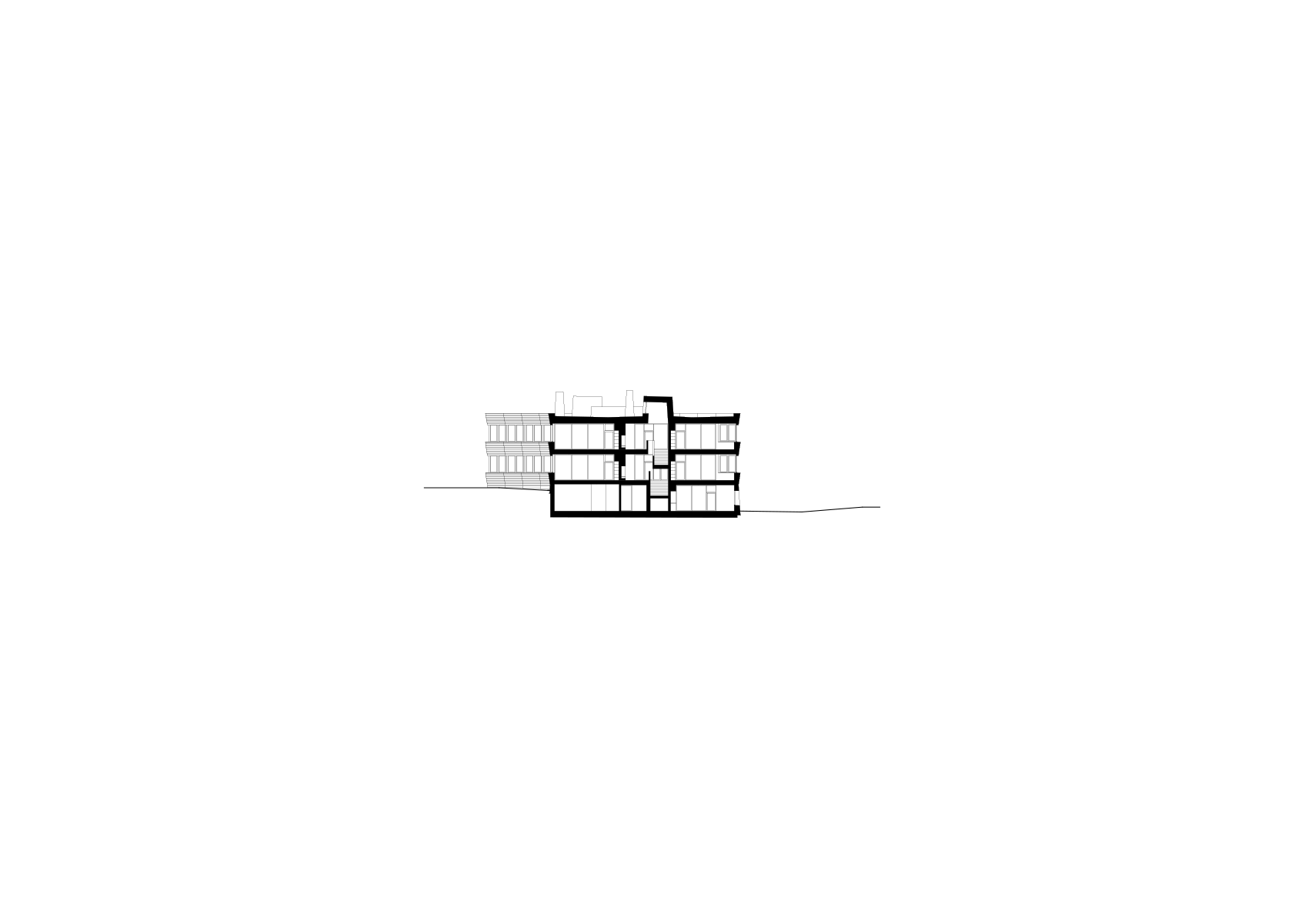
Set in the northeastern corner of the plot, the building takes advantage of the natural slope to form a plinth. Here, the main entrance opens towards the existing school campus, while the schoolyard is placed to the west. Designed for future expansion, the yard is intended to become the center of the Haldenacher schools. Public paths flow around the volume and connect it seamlessly to the surrounding network of streets and trails.
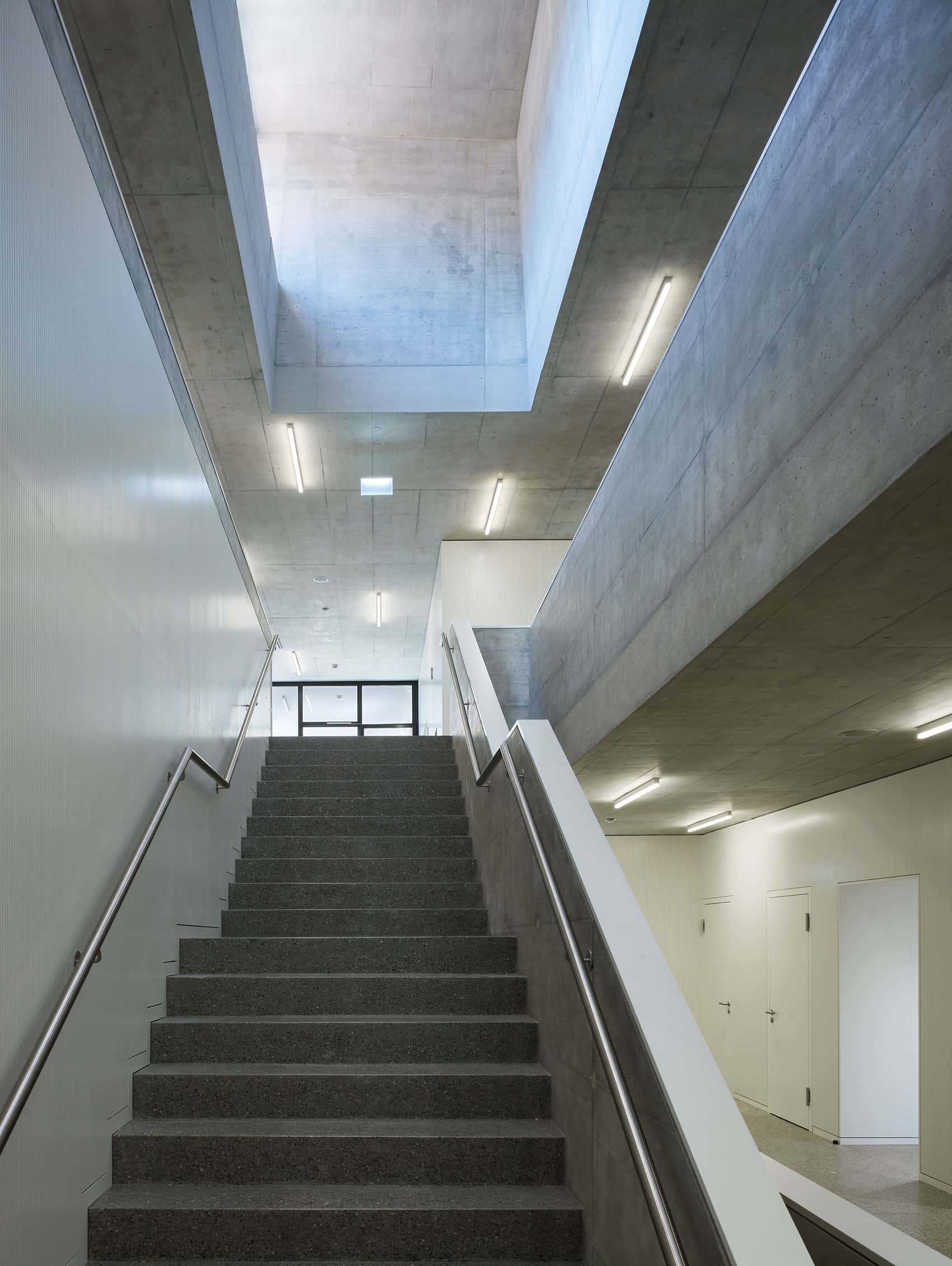
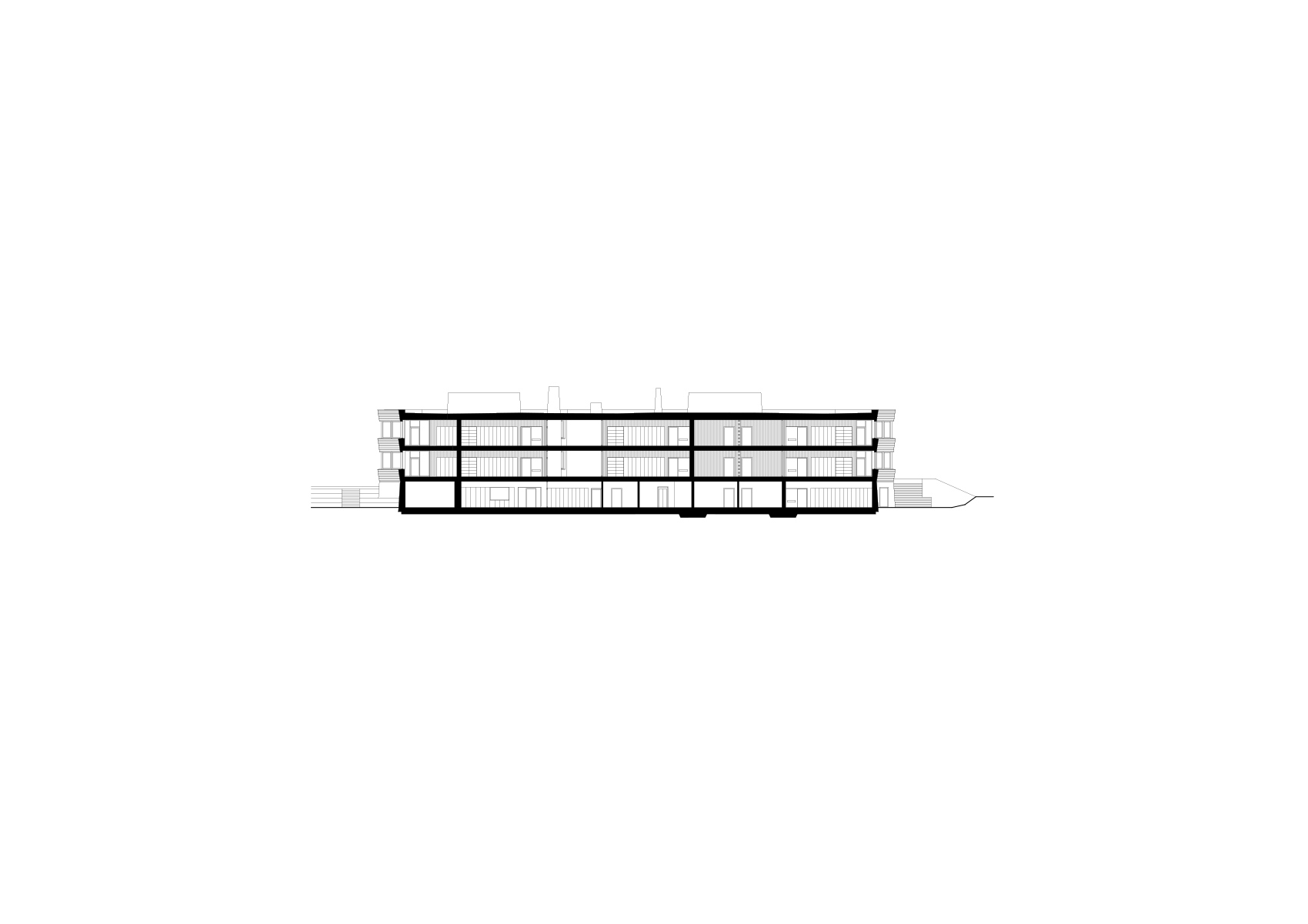
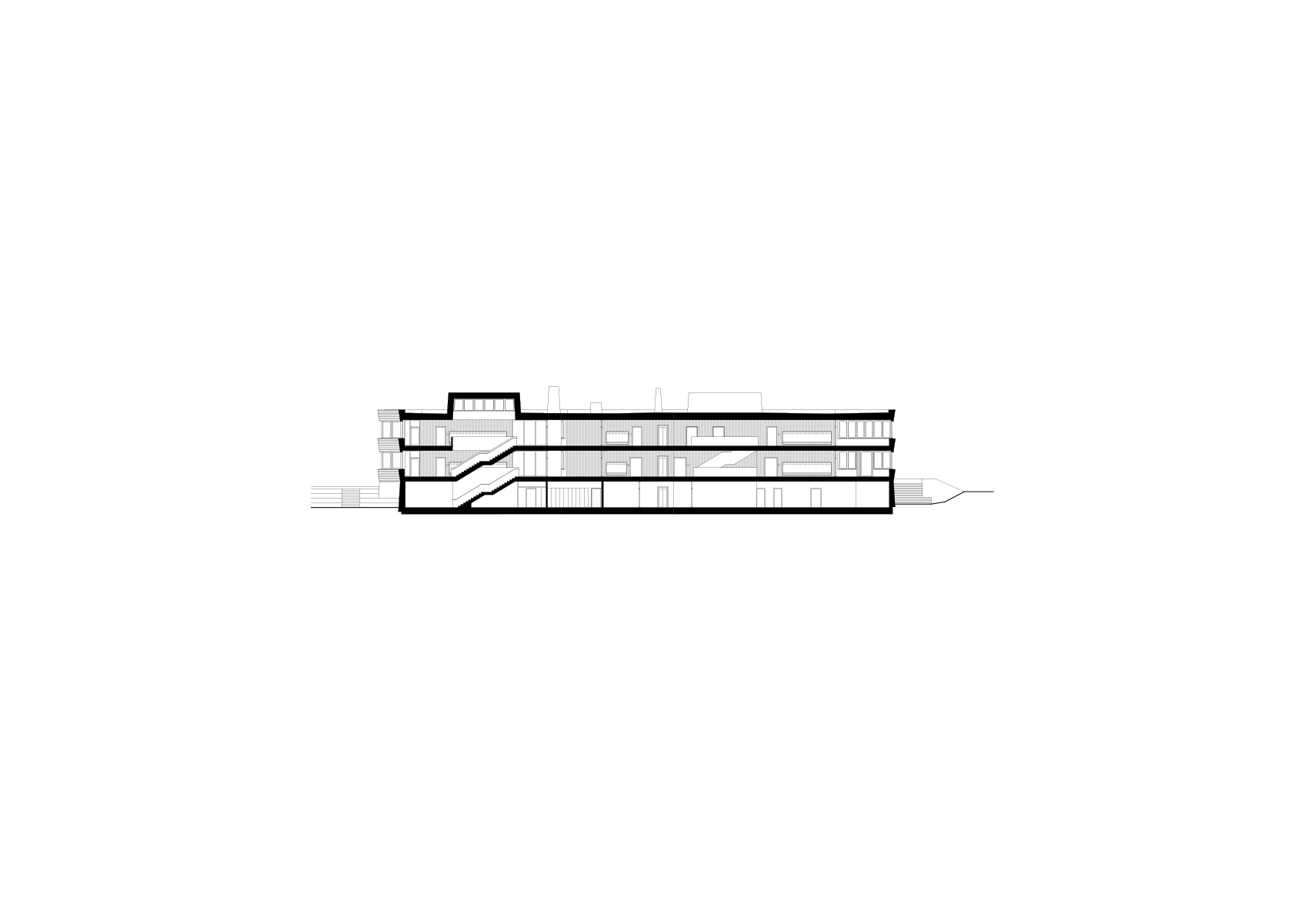
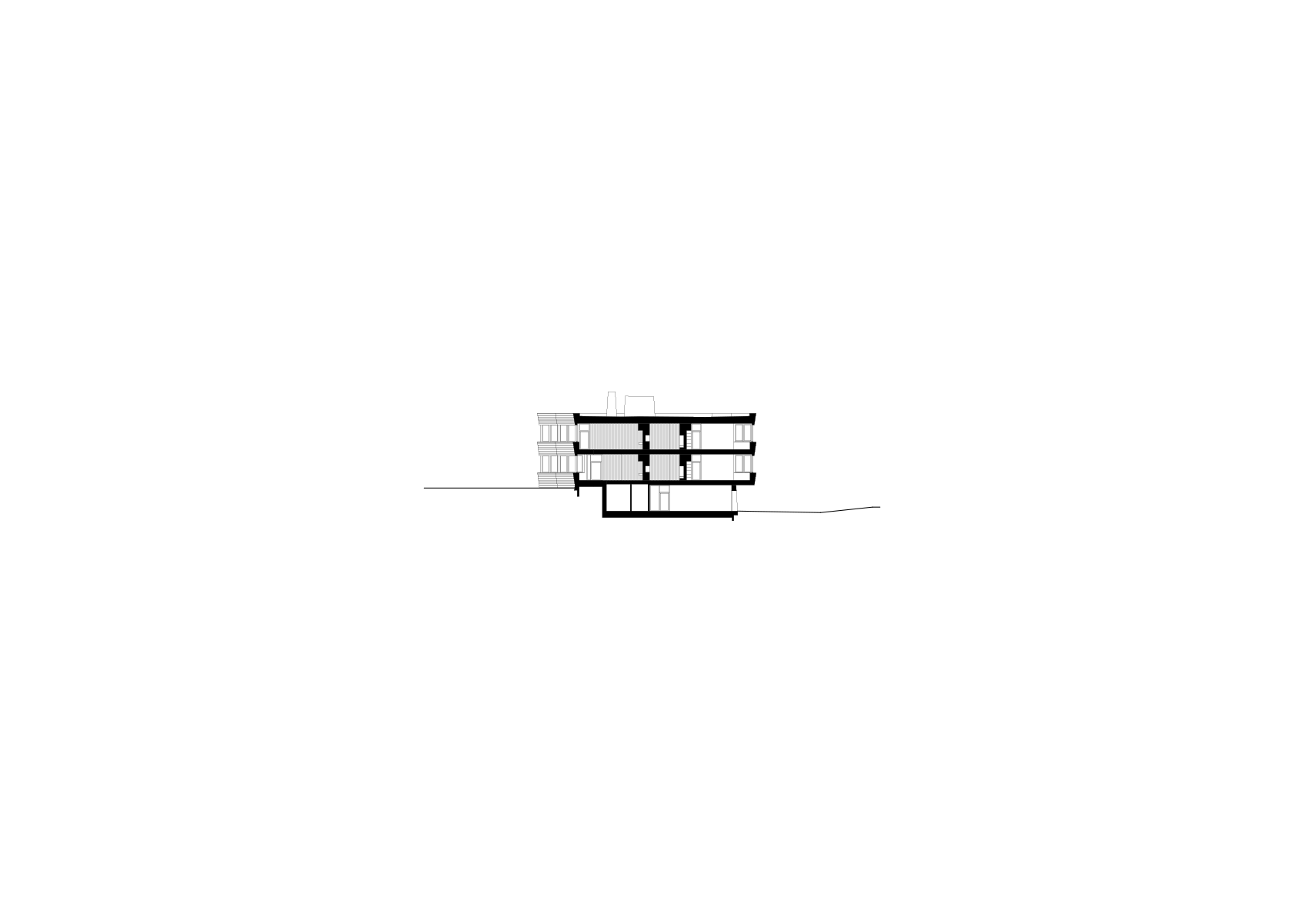
Responding to topography and program, the building is organized into a base level and two upper floors. Continuous window bands blur the boundary between inside and outside, giving the structure a clear horizontal expression. The concrete plinth, thickening as it meets the ground, balances the cantilevered wooden cladding above. Entrances are accentuated by setbacks and projecting volumes, while skylights and chimneys animate the flat roof into a sculptural roofscape.
The program separates into two parts: classrooms and the multipurpose hall on the upper floors; teachers’, therapy, and music rooms on the ground floor. An additional southeast entrance provides independent access to these rooms outside school hours, while deliveries arrive from Haldenacher Street.
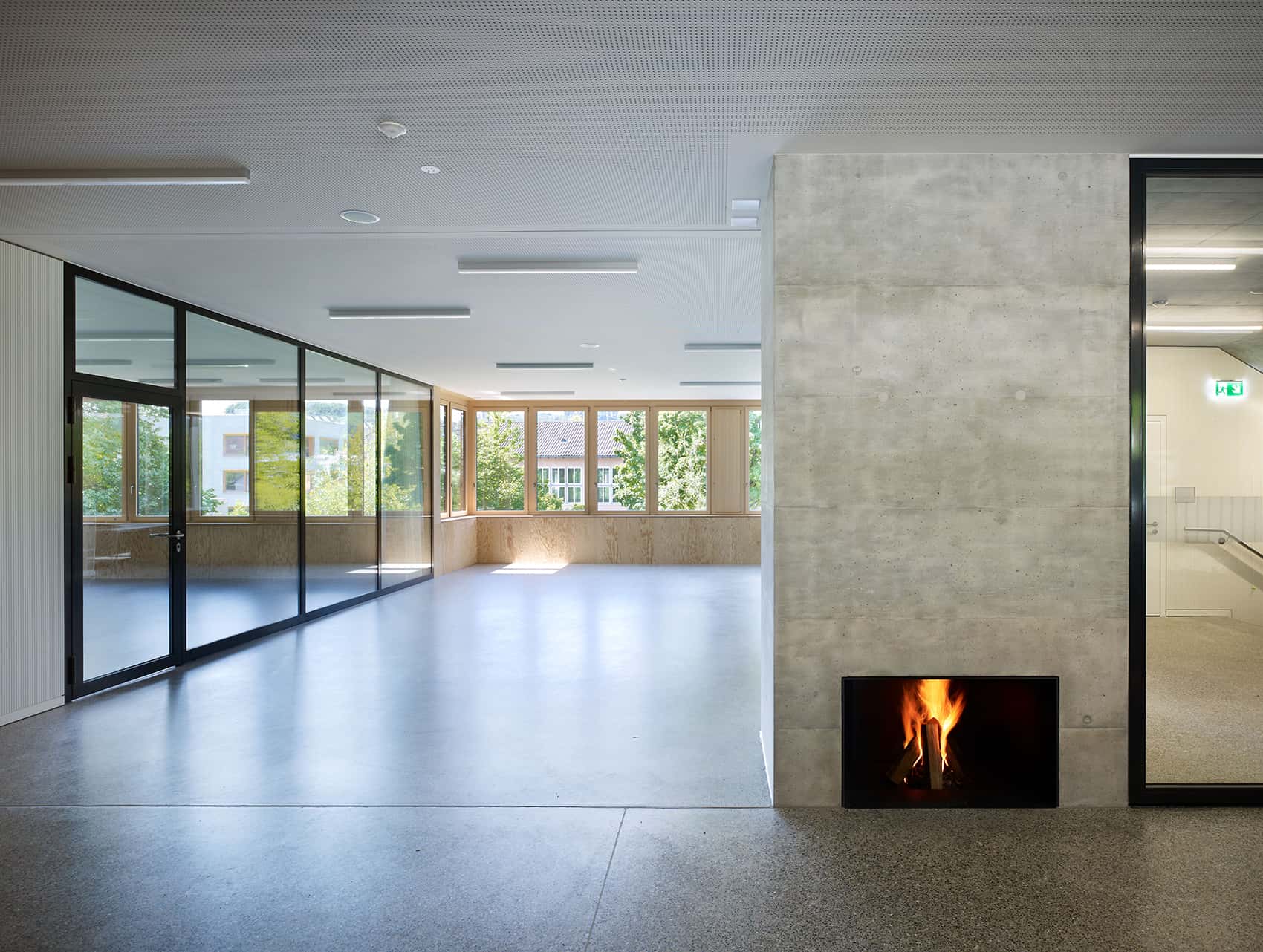
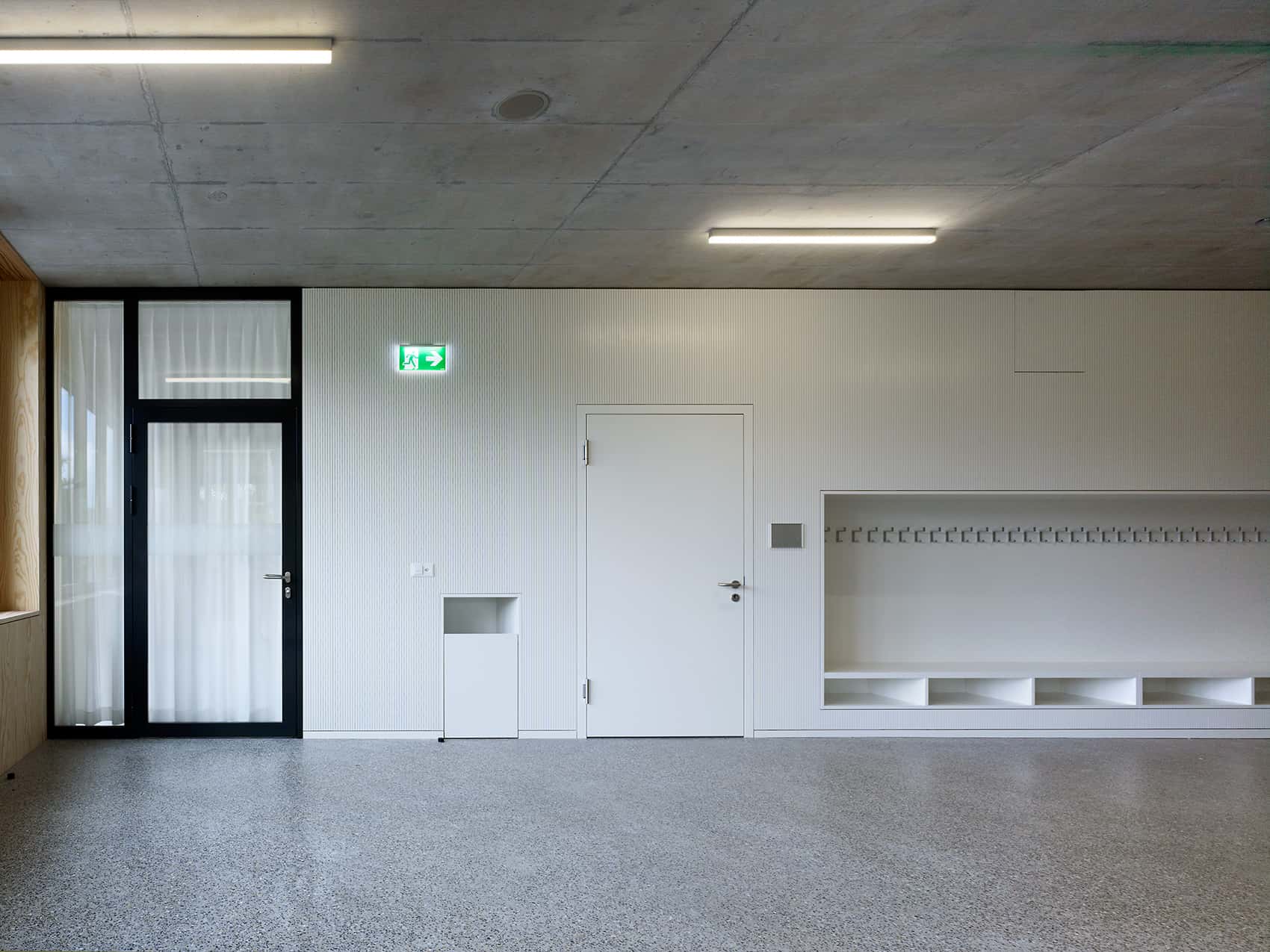
The warm texture of the wooden façade contrasts with the sleek, white-painted interior walls. These serve as noise-absorbing surfaces and integrate functional elements such as shelves, sinks, wardrobes, and even entire rooms including toilets, secondary spaces, and the elevator. Light glass partitions with translucent curtains mediate between the expressive façade and the calm inner structure.
At the heart of the school are four flexible learning areas. They extend classrooms, provide space for social interaction, or serve as interior break rooms. A fireplace in the first-floor learning area forms the symbolic center of the school, reinforcing the sense of community between children and teachers and creating a homely atmosphere that transcends the purely functional.
Architecture / Design Firm:
Dürig AG, Zurich; Guillermo Dürig, Jean-Pierre Dürig, Noélie Ernst,
Bettina Kimmig, Luiza Kitanishi, Irene Schlömer
Planning Team:
General contractor:
uas unternehmen für architektur und städtebau ag, Zurich; Jean-Pierre Dürig, Bettina Kimmig
Cost planner:
Anderegg Partner AG, Zurich; Sabir Aliu, Erich Linzenkirchner, Jennifer Probst, Sven Ungar, Marco Vanoni
Landscape architecture:
Kuhn Landschaftsarchitekten GmbH, Zurich;
Irina Glander, Ludivine Gragy, Stephan Kuhn
Structural engineer:
Synaxis AG, Zurich; Thomas Lüthi, Andreas Scheiwiller
HVAC engineer:
Amstein + Walthert AG, Zurich; Fatlum Arifi, Bernhard Dütschler, Selim Erikci, Tony Gmünder, Christoph Lüthi, Shayra Morgenegg, Salvatore Schipani, Dominik Schlauri
Electrical engineer:
Amstein + Walthert AG, Zurich; Alfons Wyss, Agan Maliqi
Physical engineer:
Amstein + Walthert AG, Zurich; Marcus Knapp, Valentina Zanotto
Façade planning:
Feroplan Engineering AG, Bern; Christoph Gäumann
Façade planning, fire protection:
Holzbaubüro Reusser GmbH, Winterthur; Hansbeat Reusser
Geologist:
Dr. Heinrich Jäckli AG, Zurich; Bernhard Gruber